
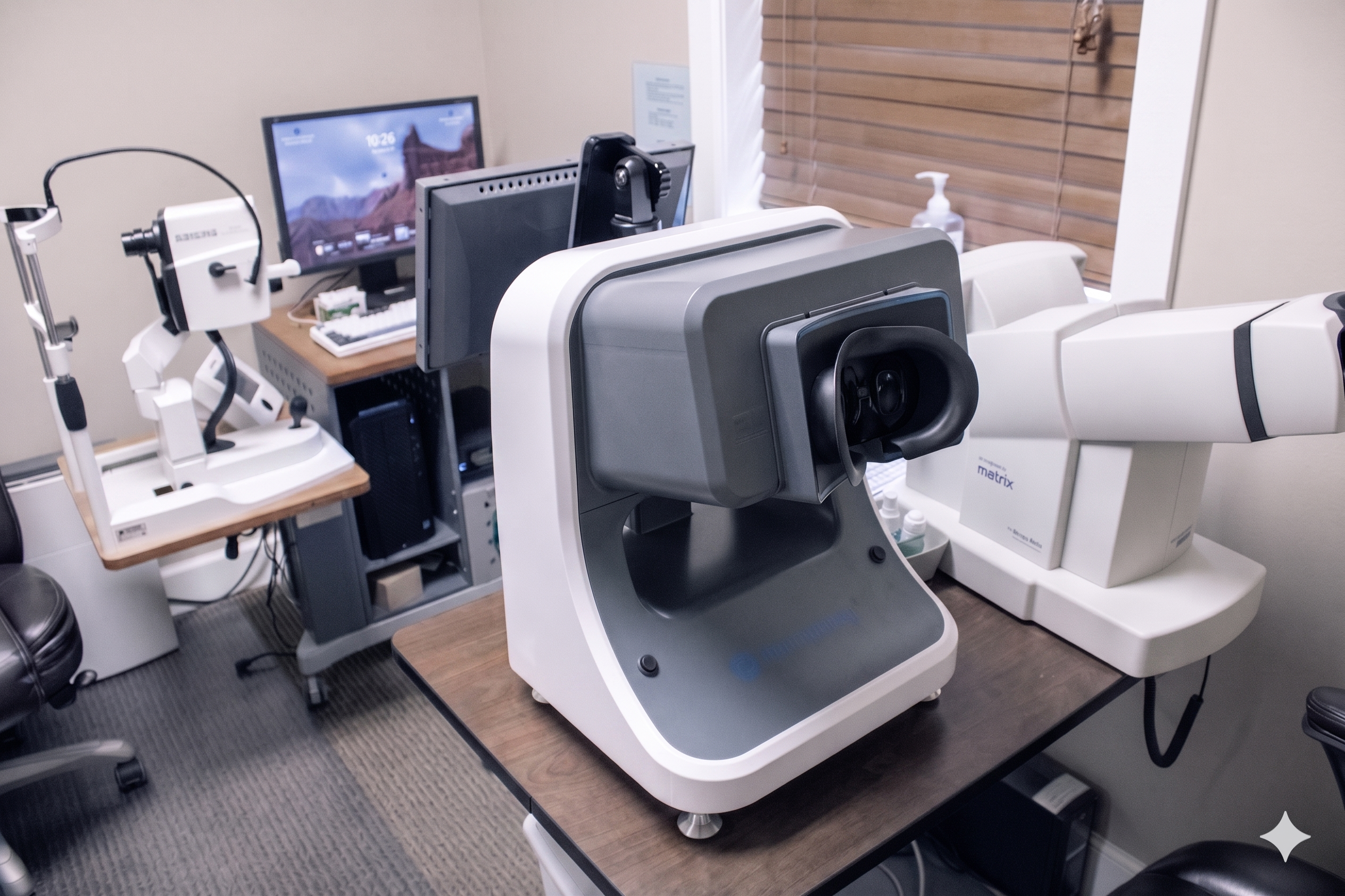
At Ackerson Eyecare, we offer Neurolens technology (also known as Newton Lens) for patients struggling with headaches, eye strain, visual fatigue, and discomfort during reading or screen use.
Many people spend hours each day focusing at close distances on computers, phones, and other digital devices. For some patients, small eye alignment issues can force the eye muscles to work harder throughout the day, leading to symptoms such as:
- Frequent headaches or migraines
- Eye strain
- Neck and shoulder tension
- Fatigue while reading
- Difficulty concentrating
- Discomfort during computer use
- Light sensitivity
Neurolens use specialized contoured prism technology designed to help relieve this strain by improving how the eyes work together at different distances.
Unlike traditional prism lenses, the amount of prism gradually changes throughout the lens, providing support where patients need it most during near and intermediate tasks like reading and screen use.
To determine whether Neurolens are appropriate, we use specialized measurement technology designed to evaluate how your eyes work together during reading and screen use. This system measures small eye alignment differences that are often missed during a standard eye exam but can still contribute to symptoms like headaches, eye strain, fatigue, and difficulty concentrating.
During the test, patients focus on a target while the system analyzes how their eyes align and coordinate at different working distances. The process is quick, non-invasive, and helps us better understand whether visual misalignment may be contributing to your symptoms.
The information gathered during this evaluation allows us to customize Neurolens specifically for your visual system and daily visual demands. For the right patient, this technology can make a significant difference in visual comfort and reduce many of the symptoms associated with prolonged near work and digital device use.
Because symptoms can vary greatly from person to person, we carefully evaluate whether Neurolens are appropriate based on your visual system, symptoms, lifestyle, and daily work demands. Our goal is to determine whether this technology could meaningfully improve your comfort and quality of life.