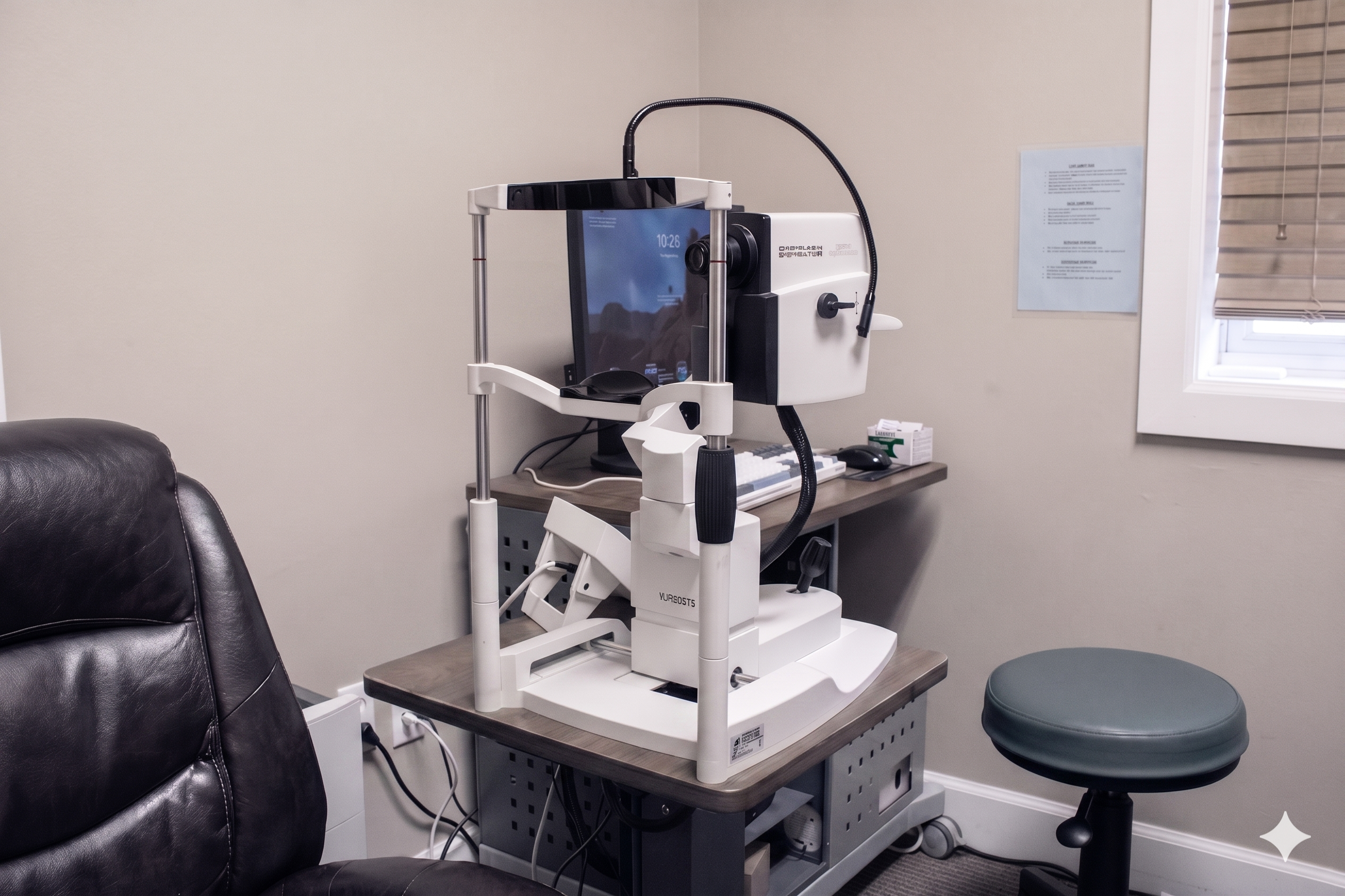
Heidelberg OCT Retinal Imaging Machine

Heidelberg OCT Retinal Imaging Machine

At Ackerson Eyecare, we use Heidelberg OCT technology to detect and monitor eye disease at an extremely detailed level—often long before noticeable vision loss occurs.

OCT, or Optical Coherence Tomography, works similarly to an MRI for the retina. Instead of taking a standard photograph, the Heidelberg OCT creates high-resolution cross-sectional images of the layers inside the eye, allowing us to identify subtle structural changes that cannot be seen during a routine exam alone.

This technology plays an important role in the early detection and long-term monitoring of conditions such as:

  • Glaucoma
  • Macular degeneration
  • Retinal disease
  • Optic nerve damage
  • Diabetic eye disease

One of the biggest advantages of Heidelberg OCT technology is its ability to track microscopic changes over time. By comparing scans year after year, we can often detect progression much earlier and make more informed treatment decisions before permanent vision loss occurs.

For many patients, this technology provides an additional level of confidence, precision, and peace of mind when it comes to protecting their long-term vision.

At Ackerson Eyecare, we use Heidelberg OCT technology to detect and monitor eye disease at an extremely detailed level—often long before noticeable vision loss occurs.

OCT, or Optical Coherence Tomography, works similarly to an MRI for the retina. Instead of taking a standard photograph, the Heidelberg OCT creates high-resolution cross-sectional images of the layers inside the eye, allowing us to identify subtle structural changes that cannot be seen during a routine exam alone.

This technology plays an important role in the early detection and long-term monitoring of conditions such as:

  • Glaucoma
  • Macular degeneration
  • Retinal disease
  • Optic nerve damage
  • Diabetic eye disease

One of the biggest advantages of Heidelberg OCT technology is its ability to track microscopic changes over time. By comparing scans year after year, we can often detect progression much earlier and make more informed treatment decisions before permanent vision loss occurs.

For many patients, this technology provides an additional level of confidence, precision, and peace of mind when it comes to protecting their long-term vision.

Discover more from

Subscribe now to keep reading and get access to the full archive.

Continue reading